
More than €800,000 Awarded for Research Projects
Alzheimer Forschung Initiative” funds DZNE projects
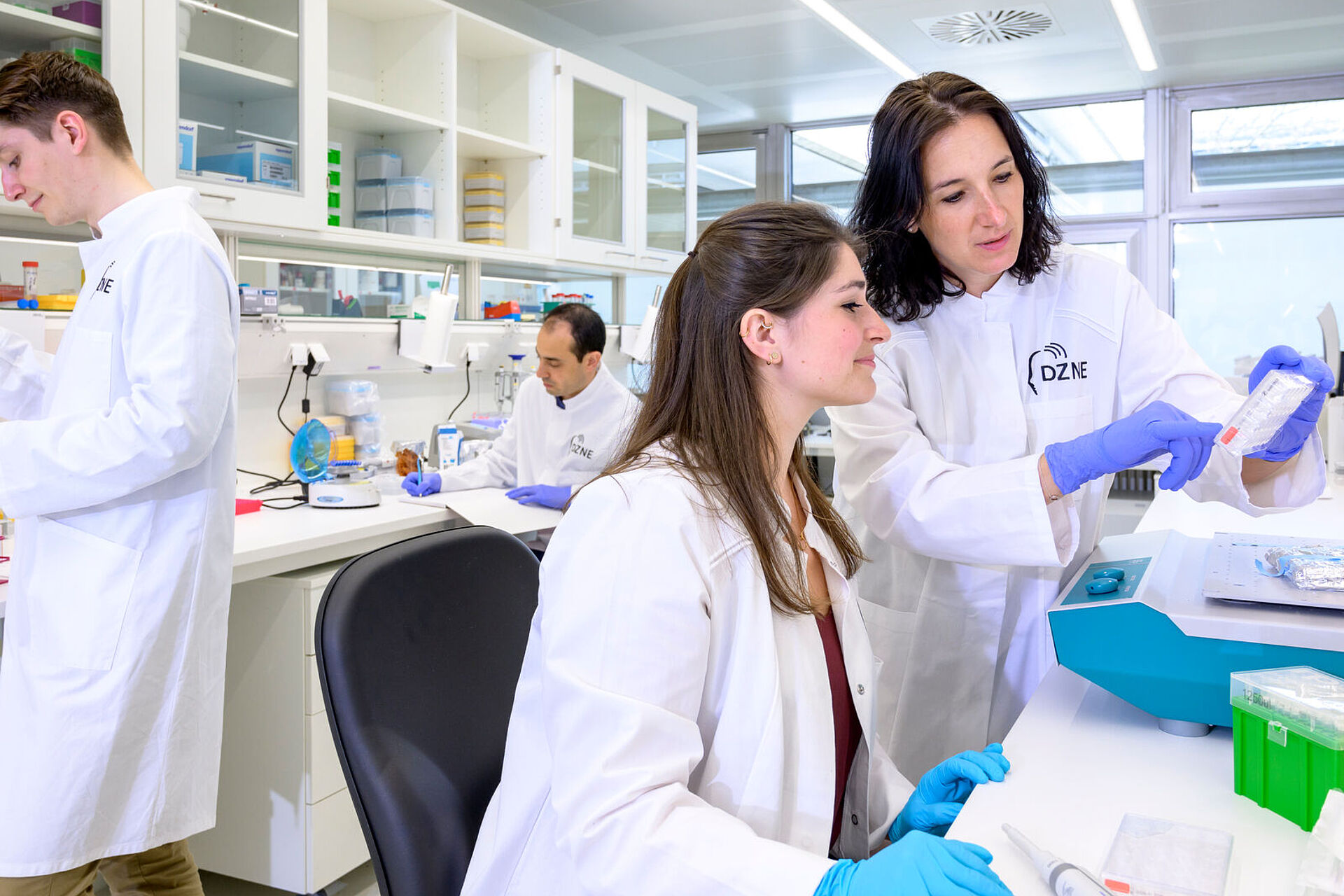
Düsseldorf/Bonn (Germany), February 3rd, 2026. Four scientific projects at DZNE are being supported by the non-profit Alzheimer Forschung Initiative (AFI) with a total of around €840,000. The funded research focuses on mechanisms of Alzheimer’s disease, smartphone-based memory tests, and changes in the brain’s white matter. Selection happened through an international peer-review process.
Funded projects:
Getting microglia back on track: slowing inflammation, stopping Alzheimer’s
Alzheimer’s disease involves chronic inflammation in the brain. This condition, known as “neuroinflammation”, is largely driven by microglia – the brain’s immune cells – due to their excessive response. Dr. Róisín McManus (Bonn) will be working to develop novel compounds and test them in mice and cell cultures to stop these harmful inflammatory processes and restore the microglia’s normal, protective role.
Video (German): https://youtu.be/6yitmbTVeiw?si=i8wW4iQOzkbimCDx
Supplying energy to the brainstem and delaying Alzheimer’s?
The “locus coeruleus” is one of the brain regions affected earliest by Alzheimer’s disease. Dr. Lars Paeger (Munich) will be exploring why this region of the brainstem is so vulnerable and the role of impaired energy production in brain cells. Ultimately, he seeks to find out, how damage to the locus coeruleus might be prevented – hoping to find new approaches for therapy.
Video (German): https://youtu.be/eRZNQVGewyY?si=b387sHFpGR4C4Lqe
Smartphone tests to predict risk for Alzheimer’s
Dr. David Berron (Magdeburg) will examine whether digital memory tests on smartphones can help detect very early changes in cognitive performance – at a stage when affected individuals may not yet notice troubling symptoms. Such digital approaches could contribute to early detection of Alzheimer’s disease and allow disease progression to be monitored more precisely than is currently possible.
Video (German): https://www.youtube.com/watch?v=qqZwC7jZ4Uo
Advanced imaging as a new tool for identifying Alzheimer’s risk?
Structural changes in the brain’s white matter can occur already in the early stages of dementia. Using magnetic resonance imaging (MRI), Dr. Alexandra Koch (Bonn) aims to investigate the causes of these subtle changes, drawing on imaging data from the Rhineland Study, a population-based DZNE study. She will also examine whether a specialized form of MRI (diffusion MRI) can help predict neuronal loss and thus identify dementia at an early stage.
Video (German): https://www.youtube.com/watch?v=Wu0zBiUwQyA