
DZNE-Led Consortium Selected for Longitude Prize on ALS

Bonn, May 8, 2028. DZNE researchers are leading an international research consortium that has been selected for the prestigious Longitude Prize on ALS. The project brings together leading institutions from Europe, North America, and Asia to apply artificial intelligence to one of the most complex challenges in neurology: understanding and treating amyotrophic lateral sclerosis (ALS).
An AI-based approach to a complex disease
ALS is marked by significant variability between patients, making it difficult to identify universal disease mechanisms or effective therapeutic targets. The consortium's approach addresses this challenge by developing an AI-based model that integrates large-scale, heterogeneous patient data – spanning genetic, molecular, and clinical information – to uncover patterns that conventional analyses have been unable to detect so far.
Central to this work is the use of causal AI, which goes beyond identifying statistical correlations to reveal biological processes that actively influence disease progression. This enables the team to define biologically distinct ALS subtypes and pinpoint key genes driving the disease – providing a foundation for the development of targeted therapies.
"This selection is a great recognition for our team. More importantly, it provides a unique opportunity to work with outstanding international partners to advance ALS research and translate promising findings into therapeutic strategies," says Prof. Andreas Hermann, DZNE.
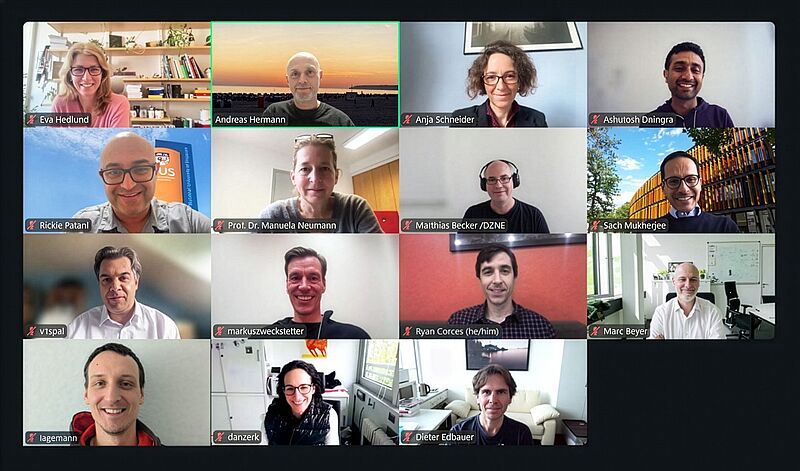
A distinguished international consortium
The selected team brings together complementary expertise across neurology, molecular biology, clinical research, and artificial intelligence. DZNE teams up with CURE-ND4ALS partners Katholieke Universiteit Leuven (Belgium) and the University of Edinburgh (UK), as well as with the Gladstone Institutes (USA), University College London (UK), the National University of Singapore, and Stockholm University (Sweden).
“The approach we are taking in VECTOR-ALS combines cutting-edge AI with deep biological and clinical expertise. This will help us to better understand the complexity and heterogeneity of ALS and open up new research directions", says Prof. Sach Mukherjee, DZNE and University of Bonn.
Access to an exceptional research resource
A defining feature of the Longitude Prize on ALS is the access it provides to an extensive, curated collection of patient data drawn from multiple international studies, encompassing genetic, molecular, and clinical records. Such data are rarely available in integrated form, due to institutional fragmentation, data protection requirements, and technical barriers. The Prize framework makes these resources accessible within a secure research environment, offering participating teams an exceptional basis for discovery.
From discovery to therapy
The Longitude Prize on ALS is led by the UK-based innovation organization Challenge Works, in partnership with the Motor Neurone Disease Association and international funders, building on the legacy of historic Longitude Prizes. Over a five-year competition, teams advance through successive stages – from the identification of therapeutic targets to their experimental validation – with projects assessed by an independent international jury on the basis of innovation, scientific quality, robustness, and translational potential.
Therapeutic targets identified through the consortium's AI-driven analyses will be validated in experimental models to evaluate their biological relevance and potential for clinical application.