
On the Cover of NEURON
New Insights into Neural Death in Alzheimer’s
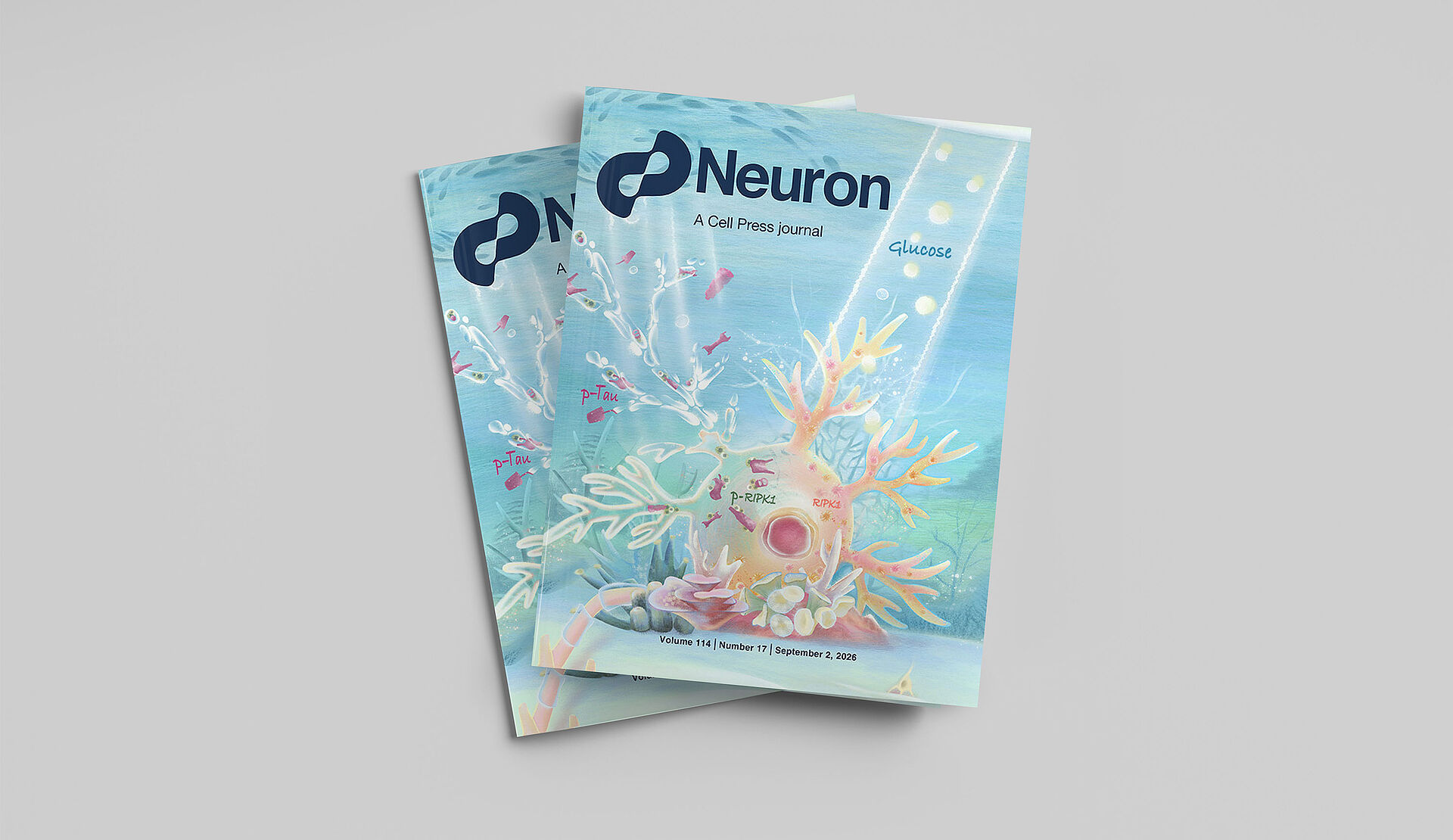
Munich (Germany), September 25, 2026. Recently, the journal Neuron featured on its cover research by DZNE scientists and colleagues on how reduced brain glucose metabolism drive neuronal death in Alzheimer’s disease.
Alzheimer’s and other neurological diseases called “tauopathies” are characterized by the accumulation of hyperphosphorylated Tau proteins within neurons. The current research, based on studies in mice, cell models, and human brain tissue, reveals that it is ultimately the combination of these aberrant molecules and an impaired capacity of the brain to process glucose – also a feature of Alzheimer’s disease – that trigger neurodegeneration.
These results could be relevant for the development and application of treatments. As they suggest that brain scans by so-called PET imaging, which can capture brain glucose metabolism, may help identify patients most likely to benefit from novel therapeutic approaches currently under investigation.
This research involved researchers from DZNE in Munich, Ludwig-Maximilians-Universität München, Munich Cluster for Systems Neurology (SyNergy) and from abroad.
An accompanying “Preview” article in Neuron by renowned neuroscientist Bart De Stropper provided context and highlighted the significance of these findings.
Original Publications
Glucose hypometabolism and hyperphosphorylated Tau synergistically drive neuronal necroptosis.
Xiaoshi Chen et al.
Neuron (2026).
DOI: https://doi.org/10.1016/j.neuron.2026.03.035
Glucose hypometabolism gates tau-dependent necroptosis.
Maria Livia Sassano und Bart De Strooper.
Neuron (2026).
DOI: https://doi.org/10.1016/j.neuron.2026.07.011