
Brain Research Meets Classical Music
“Music & Brain” at Bonn’s Bundeskunsthalle
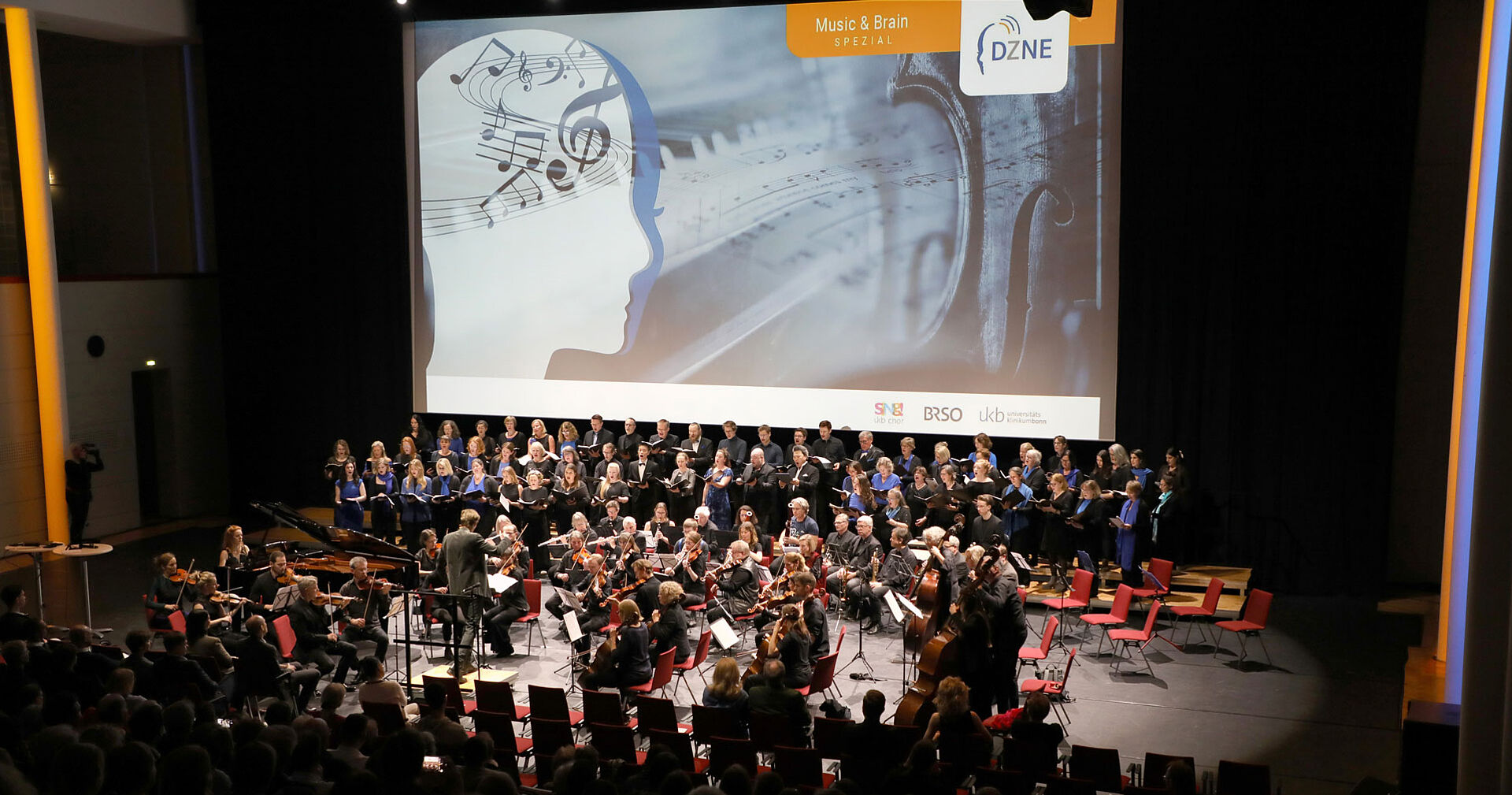
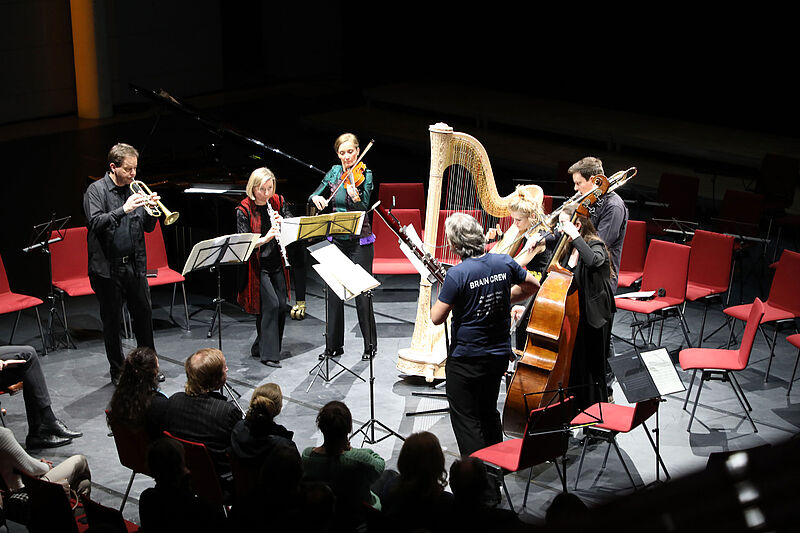
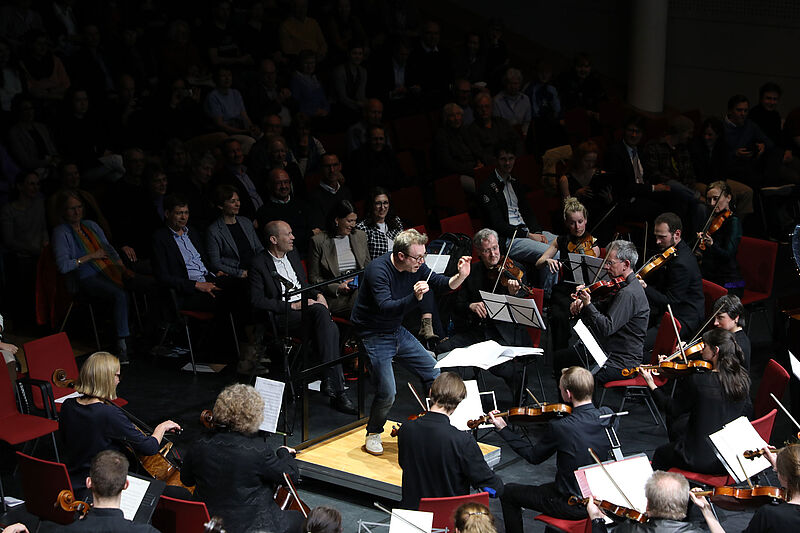

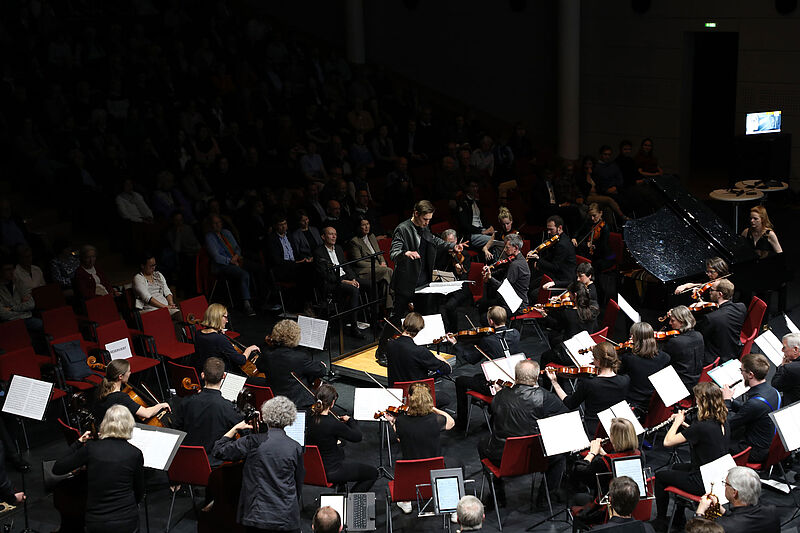
Last Sunday, around 400 people experienced a special edition of “Music & Brain” in the Forum of the Bundeskunsthalle with several highlights: In addition to the project orchestra and choir of the University Hospital Bonn (UKB), an ensemble of the Bavarian Radio Symphony Orchestra (BRSO) joined the Bonn audience for a musical rendezvous. The evening’s repertoire included works by Carl Philipp Emanuel Bach, Georg Philipp Telemann and Ludwig van Beethoven. The emotional finale was Brahms’ “Hungarian Dance” – directed by the world-famous conductor Daniel Harding.
Certainly, science was also on the agenda: In her welcoming address, Dr. Sabine Helling-Moegen, DZNE’s Administrative Director, emphasized the importance of private research funding. In a subsequent lecture, Prof. Joachim Schultze, DZNE’s Director of Systems Medicine, called for a “Decade of Brain Health” and for better use of medical data in the search for therapies against dementia and other consequences of neurodegeneration. Also, Prof. em. Eckart Altenmüller, a neurologist and former director of the Institute for Music Physiology and Musician’s Medicine at the Hanover University of Music, Drama and Media, gave a talk on the effect of music on the brain – which has also proven beneficial in the treatment of neurodegenerative diseases.
In addition, scientific data, acquired just hours before by brain scanning, was presented on stage: This was possible because several members of the BRSO, along with conductor Daniel Harding, had agreed to have their brains examined that afternoon. This happened for a reason: Studies have shown that the brains of professional musicians have special features, for example in the areas responsible for fine motor skills. Would such characteristics be evident in this small sample? They were indeed, as Prof. Alexander Radbruch, director of UKB’s Department of Neuroradiology and head of DZNE’s “Human Imaging” research focus, pointed out in his presentation.
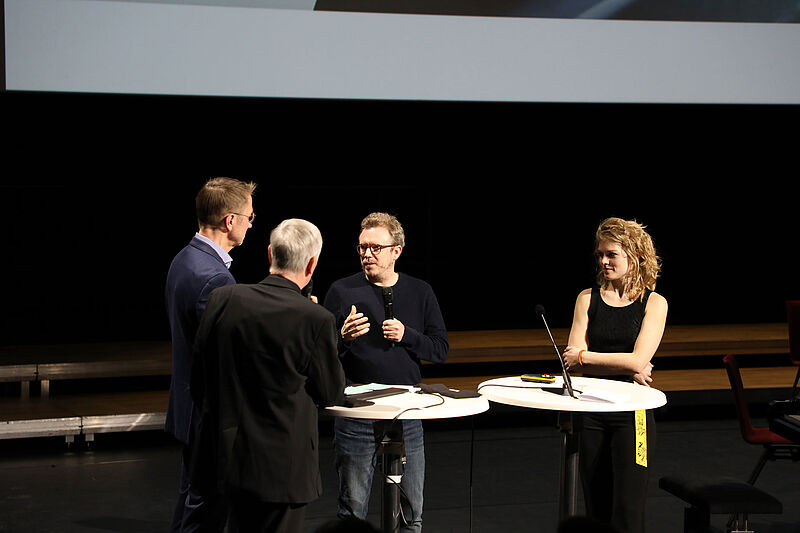
Further insights into the interaction between music and the brain were provided by a round table discussion which included harpist Magdalena Hoffmann, tenor Andrew Staples, Daniel Harding and Eckart Altenmüller. The discussion was moderated by journalist Uwe Schulz, who also hosted the evening.
The next edition of “Music & Brain” – which will be back to the usual format – will take place on June 30 in DZNE’s lecture hall on the Venusberg.
March 2025